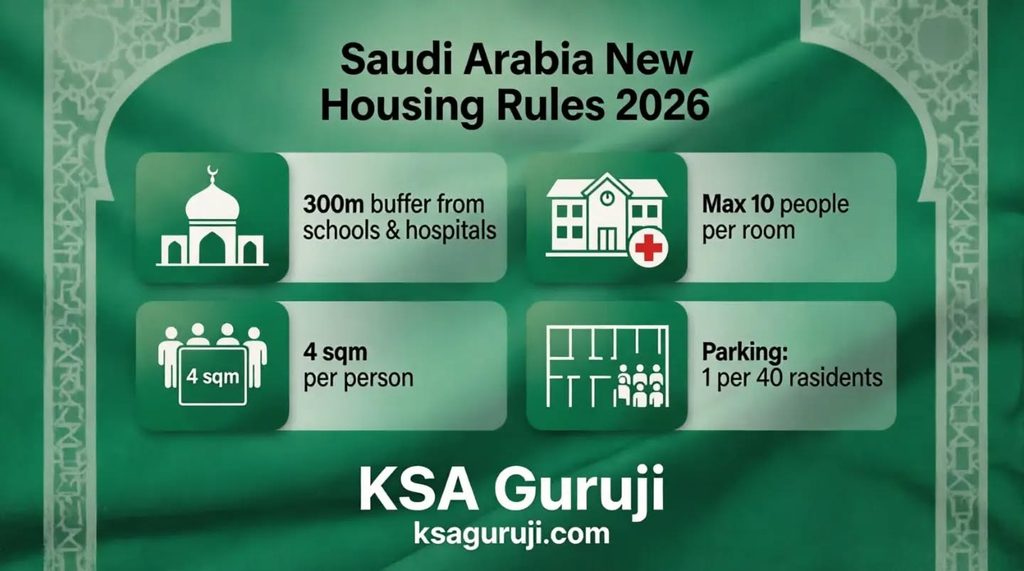
Saudi Arabia has introduced comprehensive new housing rules for 2026, marking a significant step toward improved living standards and urban planning aligned with Vision 2030 objectives.
📊 KEY REGULATIONS:
1. Location Requirements – 300m Buffer Zone Residential accommodations must maintain a minimum 300-meter distance from schools and hospitals. This regulation promotes:
- Reduced traffic congestion around sensitive facilities
- Quieter, more peaceful residential environments
- Better emergency access for hospitals
2. Occupancy Limits – Maximum 10 People Per Room A clear cap on room occupancy ensures:
- Improved health and safety standards
- Better quality of life for residents
- Compliance with international labor accommodation standards
3. Space Requirements – 4 SQM Per Person Minimum living space of 4 square meters per resident guarantees:
- Adequate personal space
- Better ventilation and hygiene
- Dignified living conditions
4. Parking Standards – 1 Space Per 40 Residents Structured parking requirements address:
- Urban traffic management
- Resident convenience
- Neighborhood organization
🎯 BUSINESS IMPLICATIONS:
For Employers:
- Review worker accommodation compliance
- Update housing contracts and policies
- Budget for potential facility upgrades
For Property Owners & Developers:
- Assess existing properties against new standards
- Plan future developments accordingly
- Ensure regulatory compliance to avoid penalties
For HR & Facilities Managers:
- Audit current housing arrangements
- Implement compliance checklists
- Update employee housing policies
📈 STRATEGIC ALIGNMENT:
These regulations support Saudi Vision 2030 goals by:
- Improving quality of life for residents and workers
- Enhancing urban planning and infrastructure
- Attracting and retaining international talent
- Building sustainable communities
⚠️ ACTION REQUIRED: Businesses and property owners should begin compliance assessments now to ensure readiness for 2026 implementation.